
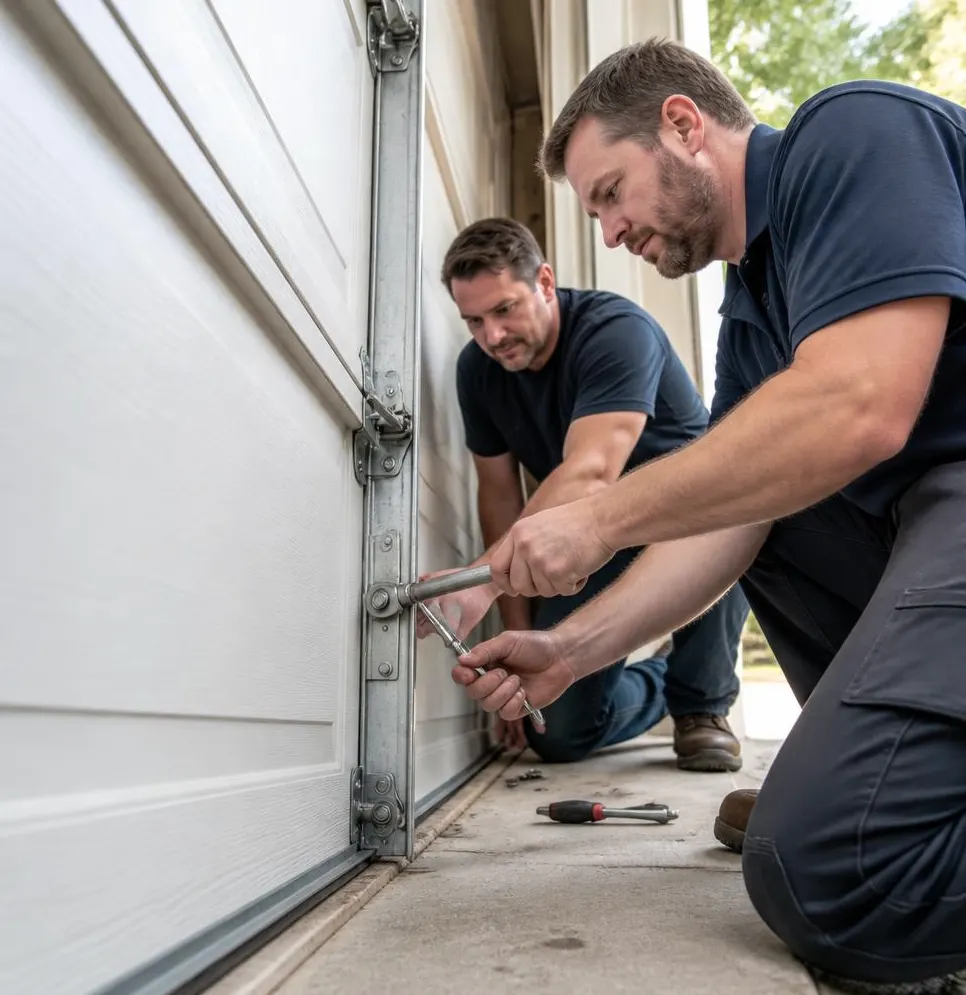
The Rule of Thumb
If you set aside twenty minutes once a season, you can catch most garage door problems before they leave you stranded in the driveway. The exceptions: if your door has slammed shut unexpectedly, a cable looks frayed or off its drum, a spring has visibly snapped, or a recent hailstorm or straight-line wind event has dented a panel or track, skip the DIY routine and call a technician instead. Those situations involve stored spring tension or structural damage, and they're not worth guessing on.
Why Fall Is the Right Time
After a long, hot North Texas summer, rubber seals dry out, lubricant gets gummy with dust, and tracks collect the grit that blows in on windy days. Doing this check now, before the occasional cold snap or ice event rolls through later in the season, means your door is sealed, balanced, and moving freely when the weather turns.
Tools You'll Need
- A sturdy stepladder
- A flashlight
- A tape measure
- A soft cloth
- Silicone-based garage door lubricant (avoid grease or WD-40, which attract dust)
- A socket wrench or screwdriver for visual checks, not for adjusting springs or cables
The 20-Minute Routine
- Walk the tracks. With the door closed, run your flashlight along both tracks looking for dents, rust, or debris buildup. Blowing dust and dirt are common here, so wipe the tracks clean with a dry cloth before moving on.
- Test the auto-reverse safety feature. Place a roll of paper towels or a 2x4 flat on the ground where the door closes. Run the door down; it should reverse immediately on contact. If it doesn't, stop using the door and call a technician right away. This is a safety system, not a convenience feature.
- Check and clean the photo-eye sensors. These are the small sensors mounted a few inches off the floor on each side of the track. Wipe the lenses with a soft cloth and make sure nothing is blocking the beam between them. A sun-faded or dusty sensor is one of the most common reasons a door won't close.
- Inspect the weatherstripping. Check the rubber seal along the bottom of the door and the strips along the sides. Summer heat makes rubber brittle, and cracked or gapped seals let in dust, heat, and eventually cold air. If it's cracked or pulling away, note it for replacement.
- Lubricate the moving parts. Apply silicone-based lubricant to the rollers, hinges, and the track itself (a light coating, not a soak). Do not lubricate the springs or cables; that's outside the DIY zone and can mask warning signs a technician would otherwise catch.
- Tighten visible hardware. Using a socket wrench, check the bolts holding the track brackets and hinges. Daily vibration from opener use loosens these over months, and a loose bracket is an easy fix now versus a bigger repair later.
- Run a balance test. Disconnect the opener by pulling the release cord, then lift the door manually about halfway. It should stay in place on its own. If it drifts down or feels unusually heavy, the springs are losing tension. Reconnect the opener and don't force it further; this is a job for a technician.
- Listen while it runs. Reconnect the opener and run the door through a full cycle, standing clear. Grinding, popping, or a new rattle usually points to worn rollers or spring wear, even if the door still opens and closes normally.
Where the Line Is
Everything above, visual inspection, cleaning, lubrication, tightening visible bolts, and the two functional tests, is safe for a homeowner to do with basic tools. The moment you're dealing with springs, cables, bent tracks, a misaligned sensor bracket, or anything inside the opener's control box, that's technician territory. Torsion springs in particular are under heavy tension and have caused serious injuries when handled without the right equipment; it's simply not a DIY repair.
When to Call Grand Prairie Garage Door
If your balance test shows a heavy or drifting door, that's usually a sign your springs are wearing out, and our Spring Replacement service handles that safely with the right tools and matched spring tension for your door's weight. If you'd rather not run this check yourself every season, our Garage Door Maintenance visits cover the full inspection, lubrication, hardware tightening, and a safety test, plus a trained eye for the kind of wear that's easy to miss, like track dents from storm debris or an opener that's starting to strain. And if a sudden hailstorm or wind event leaves your door damaged or stuck, our Emergency Garage Door Service means you're not waiting days for a fix.
If anything here felt off during your check, or you'd rather hand the whole routine to someone local, give Grand Prairie Garage Door a call. We serve homeowners across Grand Prairie, TX and the surrounding area, and we're happy to take maintenance off your plate this season.